Food Recovery Organizations and Services Requirements
FROs/FRSs that provide food donation contracts to EFGs are required to maintain and provide all necessary recordkeeping during inspections:
- The name, address, and contact information for each commercial edible food generator that the food recovery organization receives edible food from
- The quantity of edible food received/collected from each EFG (must be tracked by pounds per month)
- The name, address, and contact information for each food recovery service that the food recovery organization receives edible food from (if applicable)
- Must provide to the city where it is located in an annual report in of the amount of edible food, in pounds, recovered in the previous calendar year
ADDITIONAL RESOURCES
To learn more about SB 1383 regulations and timeline view CalRecycle’s SB 1383 Model Food Recovery Agreement Presentation(PDF, 1MB).
Signage and Training for Edible Food Generators:
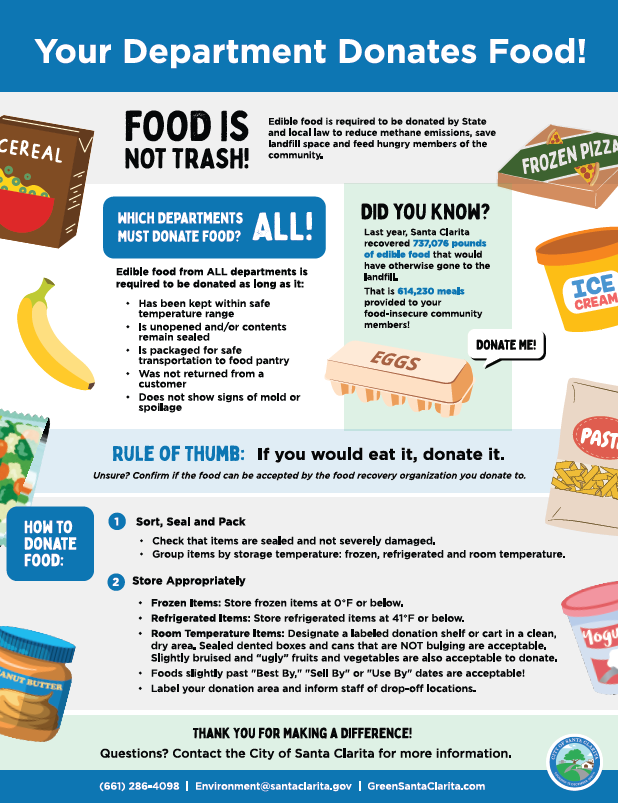
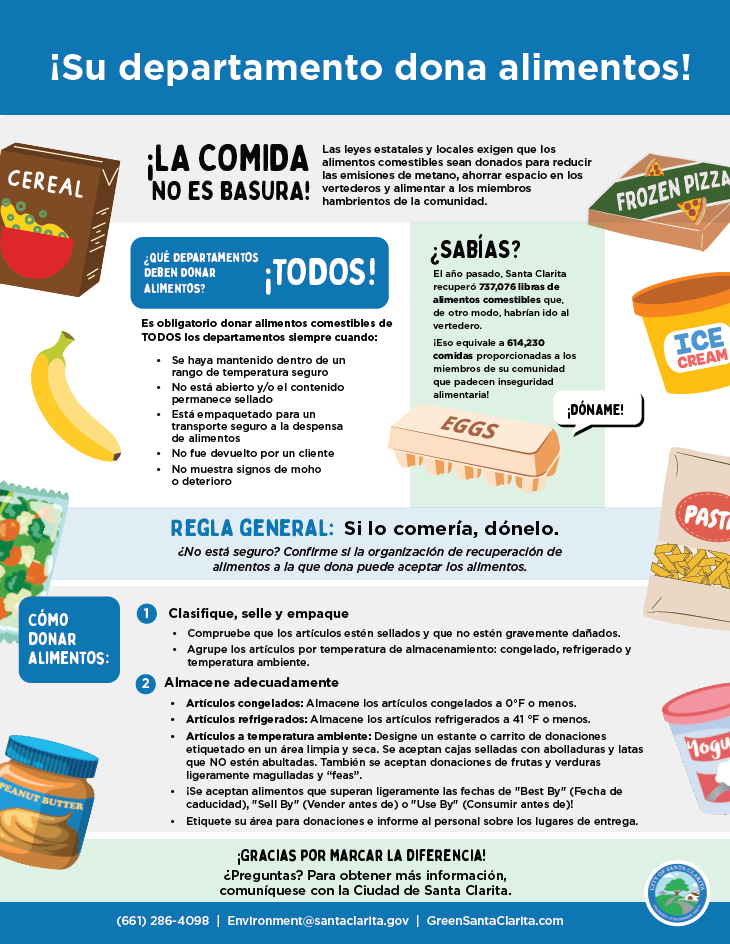
- “Food is not Trash” Informational Flyer for Food Recovery”: English and Spanish
- “Donation Guidelines for Edible Food Recovery: English and Spanish
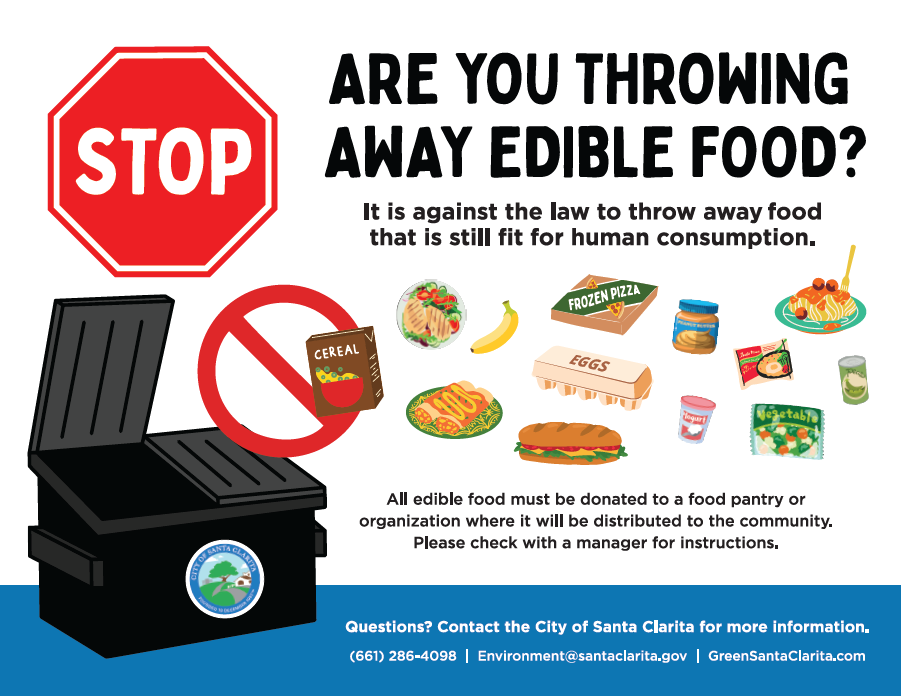
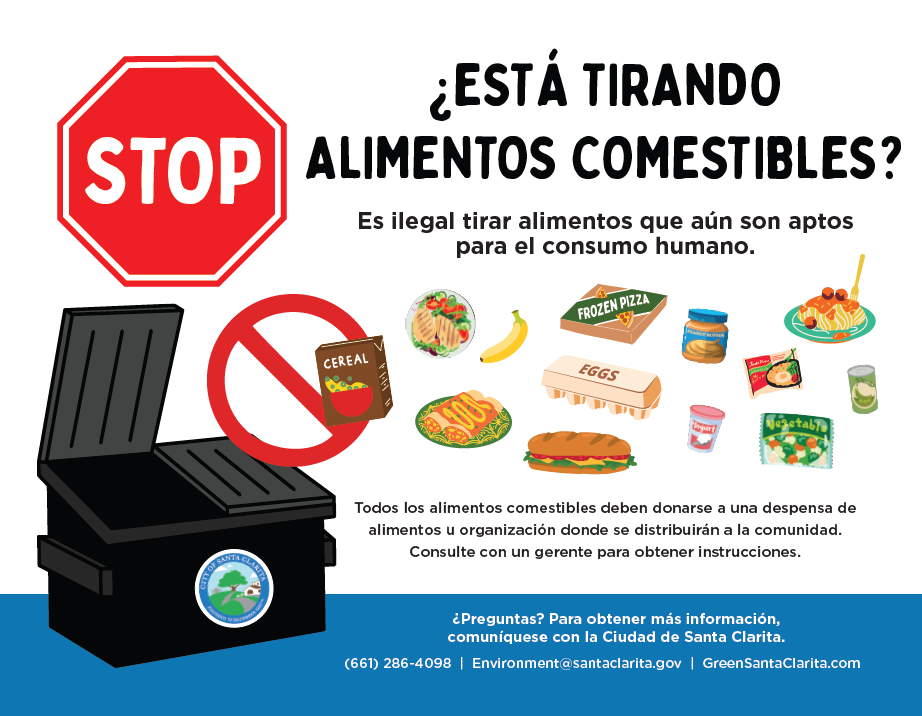
- “Stop Sign” Informational Signage for Identifying Edible Food: English and Spanish
- Edible Food Recovery Program Training Manual: English (Spanish coming soon!)
Edible Food Recovery Training Video
Outreach and Food Reduction Tips:
Save the Food: Provides planning, storage tips, and tools to reduce edible food waste. Includes
interactive storage guide, and tips for cooking with food scraps.
Further with Food: Users share their responses, initiatives, tools, and best practices geared to curb food waste.
Food DROP LA: Provides business resources including Food Donation Toolkit and Food Donation Tracking Form.
Los Angeles County Food Redistribution Initiative: LA County Department of Public Health site provides resources to the public about safe methods to prevent, donate, and recycle excess food.